

Choose Magic Kingdom if your group’s wish list centers on the castle, familiar Disney stories, and the classic theme-park mix. Choose EPCOT if exploring places, ideas, and a different set of attractions is the bigger draw.
That is the short answer. The more useful answer comes from the people going with you. Both parks have rides, places to wander, food, and entertainment. Neither is only for children or only for adults.
If you have one park day, start with what would make that day feel worthwhile. Then check the practical details around that choice. A park that holds your group’s real priorities will usually make more sense than the one a stranger calls best.
Make the choice about experiences
Ask everyone for two things they most want to do. Keep the answers specific enough to place in a park.
“Disney” is not a park choice. “See Cinderella Castle” is. “Explore World Showcase” is another clear priority. The more exact the wish list, the easier it is to compare.
Use the official Magic Kingdom park overview and EPCOT park overview to see the current offering. Read them with your group rather than assuming everyone has the same picture of each place.
Separate things you want to see from things you want to ride. A setting can be important even if a particular ride is not. Someone may care deeply about the castle, or want time around the pavilions, without wanting the biggest attraction nearby.

See which starting point fits
| Your group’s priority | Start by considering | What to check next |
|---|---|---|
| The castle and classic Disney story settings | Magic Kingdom | Which shared attractions matter most. |
| World Showcase and its different country settings | EPCOT | How much time you want to explore and the actual daily offering. |
| A few specific headline rides | The park with those rides | Current availability, format, and requirements. |
| A festival | EPCOT, if the event is running | Event dates, included experiences, and extra costs. |
| A day with younger children | Either, after reading the attraction mix | Interests, comfort, boarding rules, and the walking plan. |
| A mixed-age group | The park with more shared priorities | Breaks, split-group options, and useful non-ride choices. |
Do not decide on one row alone if another need would make the day difficult. A festival may appeal to the adults, for example, but the rest of the group still needs a visit they want to share.
Choose Magic Kingdom for its classic park identity
Magic Kingdom makes the strongest case when the castle and its surrounding lands are a large part of the reason for the trip. If your group keeps naming classic Disney settings, take that seriously.
It also helps to separate the idea of a classic park from a promise of a gentle day. The ride mix includes different formats and levels of intensity. Read the attractions you care about rather than assuming that familiar stories mean every experience suits everyone.
Choose a few priorities in nearby parts of the park. A plan that jumps across the map for each attraction can turn the day into a series of walks. You may enjoy more by staying with an area long enough to notice it.
The Magic Kingdom guide gives you the broader setting and THMPRK assessment. Use it to judge the whole visit, then follow official pages for the rides and current operating details that affect your day.
Choose EPCOT for its particular mix
EPCOT can be the stronger fit when exploring its places and ideas is what you want. World Showcase is a clear part of that identity, alongside the park’s other areas and attractions.
Do not reduce the choice to food versus rides. Read the actual attraction lineup and think about how your group would spend the time between those choices. EPCOT needs the same practical attention to ride comfort and requirements as any other park.
If a festival is part of the appeal, check the specific event and date. A festival name does not mean every experience is included with ordinary admission, offered every day, or suitable for every visitor.
You may want a slow day of exploring. You may want several major attractions with time around them. Those can be quite different EPCOT visits. Pick the version you want before deciding how much to fit in.
Our EPCOT guide is a useful next stop for comparing its character and practical context with your other options.
Give younger children a real voice
Avoid the shortcut that says children automatically need Magic Kingdom and adults automatically need EPCOT. Ages do not tell you which stories, places, or ride formats people enjoy.
Ask what the child recognizes and what they are curious about. Then show a few actual choices from each park. A short list is easier to understand than a long scroll of attractions.
Read descriptions with comfort in mind. A child may enjoy one dark indoor attraction and dislike another. An attraction without a major drop can still have loud sounds or scenes they would rather skip.
Do not treat a child’s reluctance as something the family must fix. There may be another shared choice nearby. The best park for this trip is the one with enough of those useful choices, not the one that wins an age-based rule.
Our guide to planning for different ages helps you collect those priorities without handing everyone the same ride list. For visitors who prefer other highlights, explore ways to enjoy a park beyond its biggest rides.
Compare the ride choices one by one
Make three lists for each park: things the group wants to share, things only some people want, and things you can leave out.
The shared list should carry the most weight in a one-day decision. The optional list helps you see where splitting up might work. The final list gives you permission to stop trying to include experiences no one is excited about.
Open the Walt Disney World attraction listings for the exact ride pages. Check requirements, warnings, and current information rather than borrowing a rule from another ride or another Disney resort.
If access is an important part of the decision, use Disney World’s accessibility resources. Ask about the specific facility or policy you need. A general statement that a park is accessible cannot answer every ride or route question.
Think through the walking and breaks
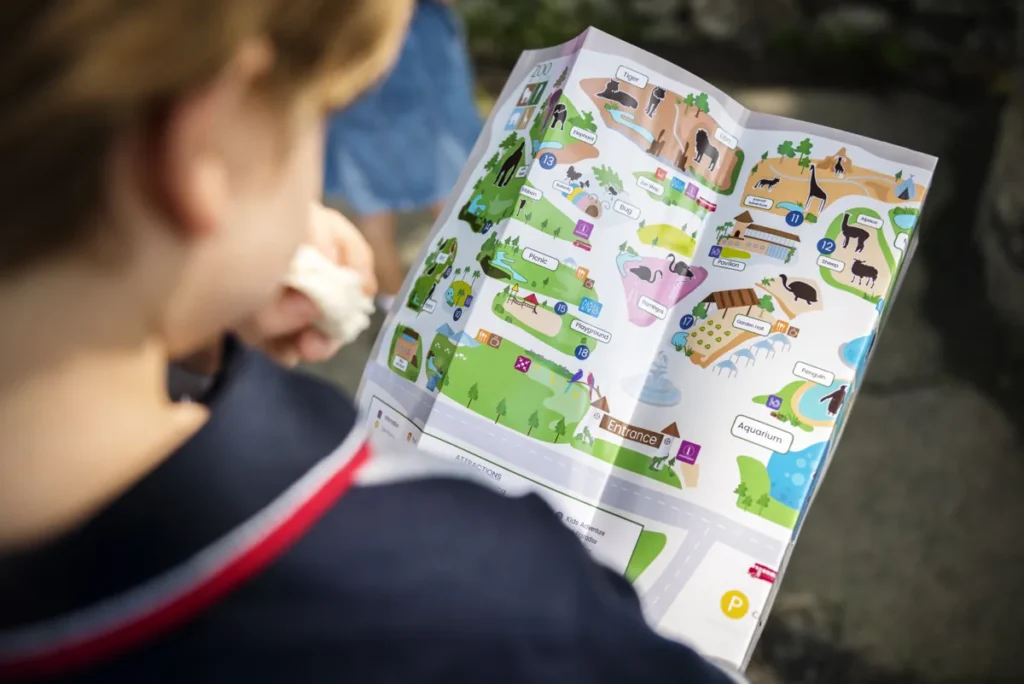
Look at the official park maps and place your priorities on them. Then add meals, pauses, and the journey to the entrance and back.
Do not compare only the time spent on attractions. A park day also includes standing, crossing areas, waiting for others, and finding somewhere to stop. The shape of your route can matter as much as the number of rides.
Pick a few possible break points rather than one perfect stop. Check whether they have the features you need. Indoor does not always mean air-conditioned, and a shaded area does not always have seating.
If your group needs a shorter day, build one honestly. Choose enough highlights to make it feel worthwhile, then leave the rest flexible. You do not have to stay from opening to closing to make a sound choice.
Use the heat-planning guide when building pauses into a Florida visit. The rainy-day checklist helps you review a different forecast without assuming every indoor experience fits your group.
Decide how food fits the plan
Ask whether eating is a key part of the visit or a practical pause between other priorities. Neither answer is wrong, but it changes how you should plan.
If a particular restaurant or food experience matters, read its current official information and booking terms. Put a fixed booking on the map before building an attraction route around it.
If food is mainly a useful stop, leave some flexibility. Choosing a place near the area you are enjoying may fit better than crossing the park for a meal you only picked because it appeared on a list.
Do not make dietary or allergy decisions from a general travel article. Use official information and contact the venue about your needs. Menus and service arrangements can change.

Be careful with the seasonal picture
A photo from a past trip can show a different park experience from the one available on your date. Check the current Disney World calendar for park hours and entertainment before fixing your plan.
Look at special-event terms separately. An evening event may require its own admission or affect the hours available to daytime visitors. The same building or park setting does not make it part of the same ticket.
If a festival or show is the main reason you are considering a park, ask how you would feel if that element changed. Have enough interest in the rest of the place that your whole visit does not depend on one uncertain detail.
Avoid guessing that one park will have lighter crowds on a holiday. Without suitable current evidence, that is not a reliable basis for the trip. Plan around the priorities and terms you can actually confirm.
Read the ticket before adding a second park
Check Disney World ticket options for the current terms. Match the admission to your intended parks, date, and plan for moving between them.
A ticket with more flexibility can be useful. It does not remove travel time or the need to decide what to leave out. If your two-park idea only works by skipping meals and breaks, it needs another look.
For a single day, compare a clear one-park plan with a clear two-park plan. Put the same group needs into both. Do not compare a relaxed afternoon in one with an imaginary day of instant access in the other.
If the highlights are split evenly, a longer trip may be the better answer when your budget and schedule allow. If that is not practical, choose the park that holds the most meaningful shared priorities. Save the other for a visit where it can have enough time.
Picture the day from start to finish
Try telling the group how the visit might feel, without a minute-by-minute schedule.
For Magic Kingdom, you might build around the castle, a few shared story experiences, a meal, and a possible entertainment finish. For EPCOT, you might combine a small set of attractions with time exploring the settings that interest you.
These are planning shapes, not promises about what will run or how long anything will take. The useful part is noticing which description makes your group more interested.
Then test that picture against practical needs. Does it have room for the person who wants more breaks? Does it give the child a highlight they helped choose? Does it leave time for the experience that made the adults want to come?
If one version only sounds good when you ignore someone’s needs, adjust it before paying.

Choose the park that gives you a reason to go
Magic Kingdom may be the right choice when its classic storybook identity keeps winning your group’s wish list. EPCOT may be right when its particular settings and attractions are what make the trip exciting.
You do not need to prove that the other park is worse. You need to know why this one fits this visit.
Use the cards below to open the current THMPRK place guides. Compare their available editorial assessments with the kind of day you want, then confirm tickets, calendars, and specific ride needs with Disney before booking.
Lake Buena Vista, Florida, United States THMPRK Score: 7.9/10 Lake Buena Vista, Florida, United States THMPRK Score: 8.0/10 Place details come from the current THMPRK guide. Check official calendars and ticket terms for your visit.Explore the places in this guide
Magic Kingdom Park
EPCOT
0 thumbs up0 thumbs down
Was it useful? Pick a thumb.