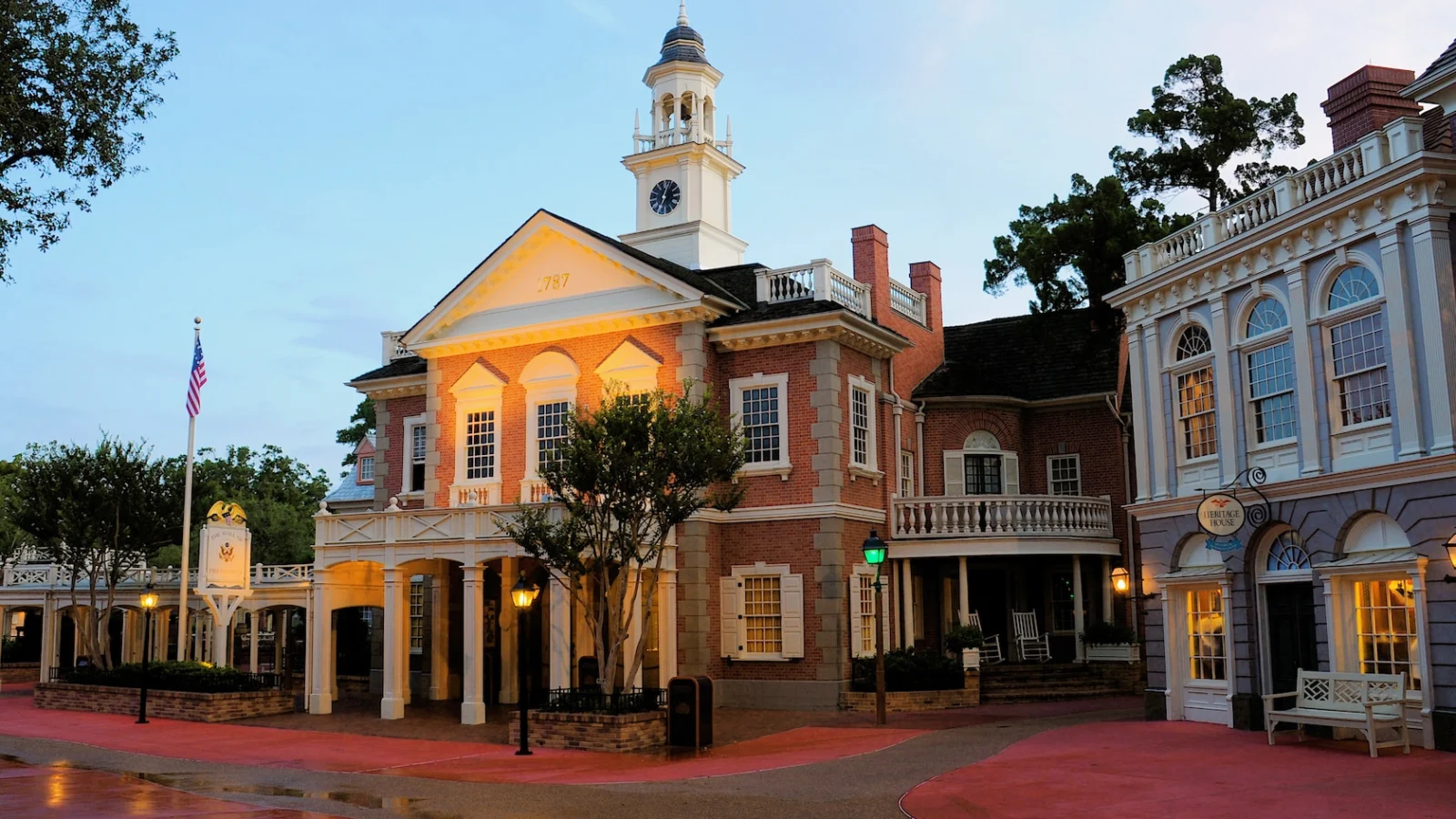
Before the Hall of Presidents opened at Magic Kingdom in 1971, Disney’s writers and artists visited Washington, D.C., Williamsburg and other historic sites. They also worked through an enormous body of written and visual evidence. D23’s Archives history records the trips and the research that supported the show. The result depended on both seeing places and examining records.
Follow the work as a sequence of research questions, rather than a single trip and flash of discovery. What history would the show tell, what did each president look like, and how could a figure convey an individual? The journeys served different parts of that longer project.
The research began before the Florida park
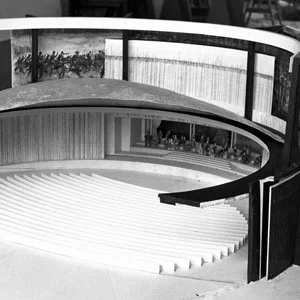
The early idea belonged to an unbuilt Liberty Street addition at Disneyland Park. According to D23’s account of the original plans, Walt assigned filmmaker James Algar to study the presidents and the nation’s founding documents. In a February 1959 meeting, the Constitution became the proposed show’s central background.
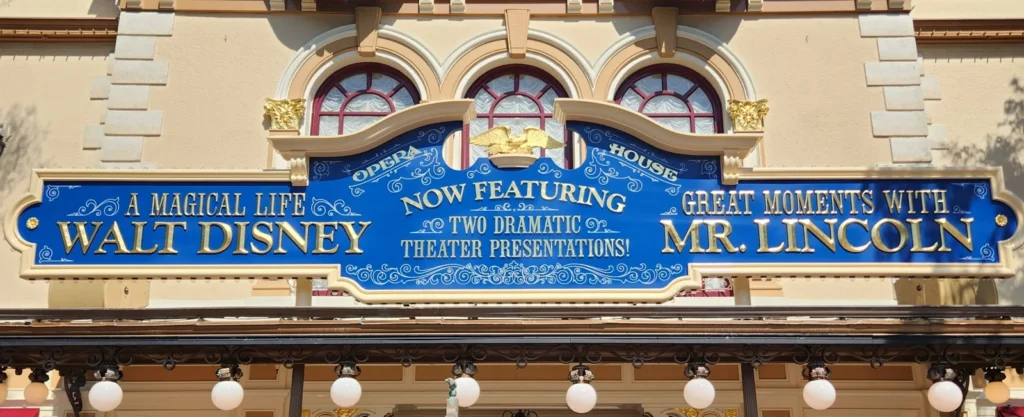
The project changed as technical and financial limits came into focus. A full group of speaking, moving presidents was hard to realize. Work on one figure—Abraham Lincoln—offered a way to demonstrate the idea. Great Moments with Mr. Lincoln reached the 1964–65 New York World’s Fair before a version opened in the Disneyland Opera House on July 18, 1965.
The Florida production therefore inherited years of research and experiments. It was a new attraction with a much older development story.
 © Disney / D23
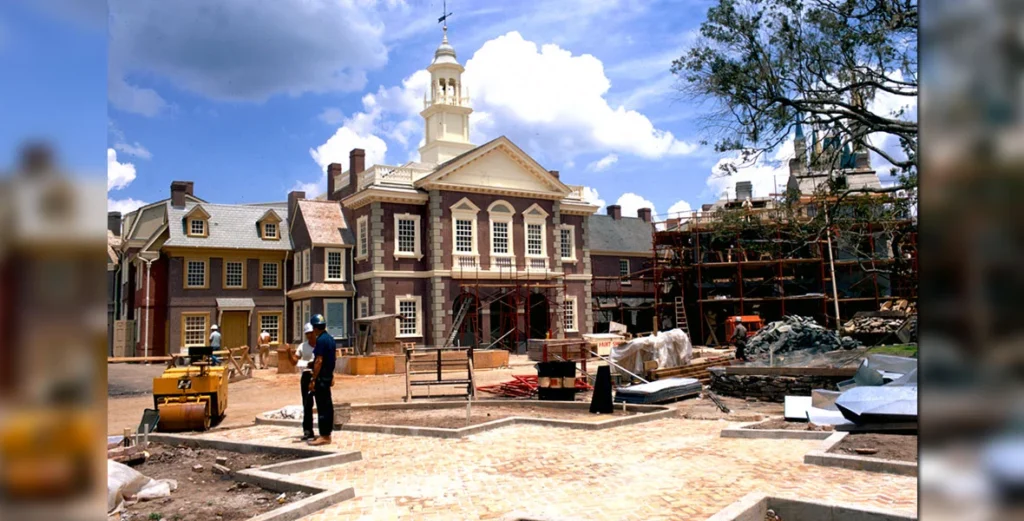
Washington and Williamsburg supplied a sense of place
D23’s history describes writers, designers and painters traveling to the places where presidents had lived and worked. It names Washington and Williamsburg, but does not give a full dated itinerary for each person. It also counts more than 600 books, roughly 300 periodicals, thousands of photographs and hundreds of paintings in the preliminary research. The Archives account is the source for those figures.
That pairing matters. A visit can help an artist understand the scale of a room or the atmosphere of a street. A book or portrait can answer a different question. Neither type of evidence automatically replaces the other.
The surviving account supports the broad purpose of the travel: to help authenticate the work. It does not support assigning every costume, chair or brushstroke to one particular stop. The strongest story is the combined process, rather than an invented turning point on an undocumented day.
 © Disney / D23
Lincoln offered an unusually direct reference
A reference object made the Lincoln research unusually direct. Blaine Gibson could consult a copy of Leonard Volk’s 1860 life cast while making artistic decisions about the face. It connected the likeness to the actual person without removing the sculptor’s judgment. D23 documents Gibson’s use of the cast.
The Smithsonian’s history of Volk’s life mask explains why it existed. Volk wanted to make Lincoln’s portrait, but Lincoln could not repeatedly attend studio sittings. A cast allowed the sculptor to continue the work. It was a life mask, taken while Lincoln was alive.
That difference is easy to miss. A physical impression can preserve facial form, but it cannot show speech, posture or personality by itself. Those parts of the figure required other sources and interpretation.
No moving-picture shortcut
A Walt Disney Archives answer describes five months spent studying Lincoln’s measurements and appearance through photographs, paintings and written descriptions. There was no film performance for the team to copy. The Archives explains the research behind Lincoln’s mannerisms.
A portrait captures one pose. A written description records someone’s observations. A face cast records shape. Bringing those sources together still leaves an artist with choices about which details best convey a person to an audience.
That is why the figure should be understood as a researched theatrical portrayal. Its movements are a created performance informed by evidence, rather than a recovered recording of Lincoln himself.
 Contributor19 / CC BY 4.0
Many crafts had to agree on the same person
Disney’s biography of Blaine Gibson traces his path from animation and private sculpture to full-time work at WED Enterprises in 1961. He went on to lead the sculpture department and direct presidential likenesses through George W. Bush. His work shows how a character artist’s skills could be applied to recognizable historical people.
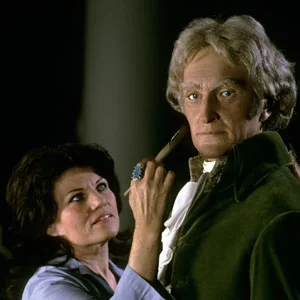
For the original Hall, the research also extended to hairpieces, period clothes and accessories. D23 describes specially made shoes and eyeglasses and a reproduction of Washington’s Constitutional Convention chair. An archival photograph shows Leota Toombs finishing the Jefferson figure. Those production details appear in the second part of D23’s history.
 © Disney / D23
What the journeys changed
The trips helped the artists connect their studio work with historic settings. The documentary research gave them references to carry into sculpture, costume and staging. The Lincoln development provided a working example of how those references could become a moving figure.
On a future visit, watch the figures as portraits as well as performers. Notice differences in silhouette, hair, clothing and pose. Then follow Walt Disney’s own documented park visits for another story about how observation beyond the studio fed Disney’s projects.
0 thumbs up0 thumbs down
Was it useful? Pick a thumb.
Guides & stories
Keep the good ideas coming.
A few next reads to help with the choices ahead.
For the places you’re exploring
How Disneyland locals turn theme park walks into exercise
Neil Haque walked Disneyland after work. Mark and Vanessa Gautier started with one mile. See how they made park walks part of their exercise routine.
Read article
For the places you’re exploring
When Johnny Depp became part of Disneyland’s Pirates of the Caribbean
Johnny Depp’s Pirates connection runs from a Disneyland film premiere to a surprise inside the ride. His interview account adds a funny twist to an attraction with its own long history.
Read article
For the places you’re exploring
How to Plan a Short Disneyland Resort Break
One focused park day or a short break across both gates? Build from your real arrival and departure, then use flexible frameworks for shared highlights, meals, pauses, and the journey home.
Read article