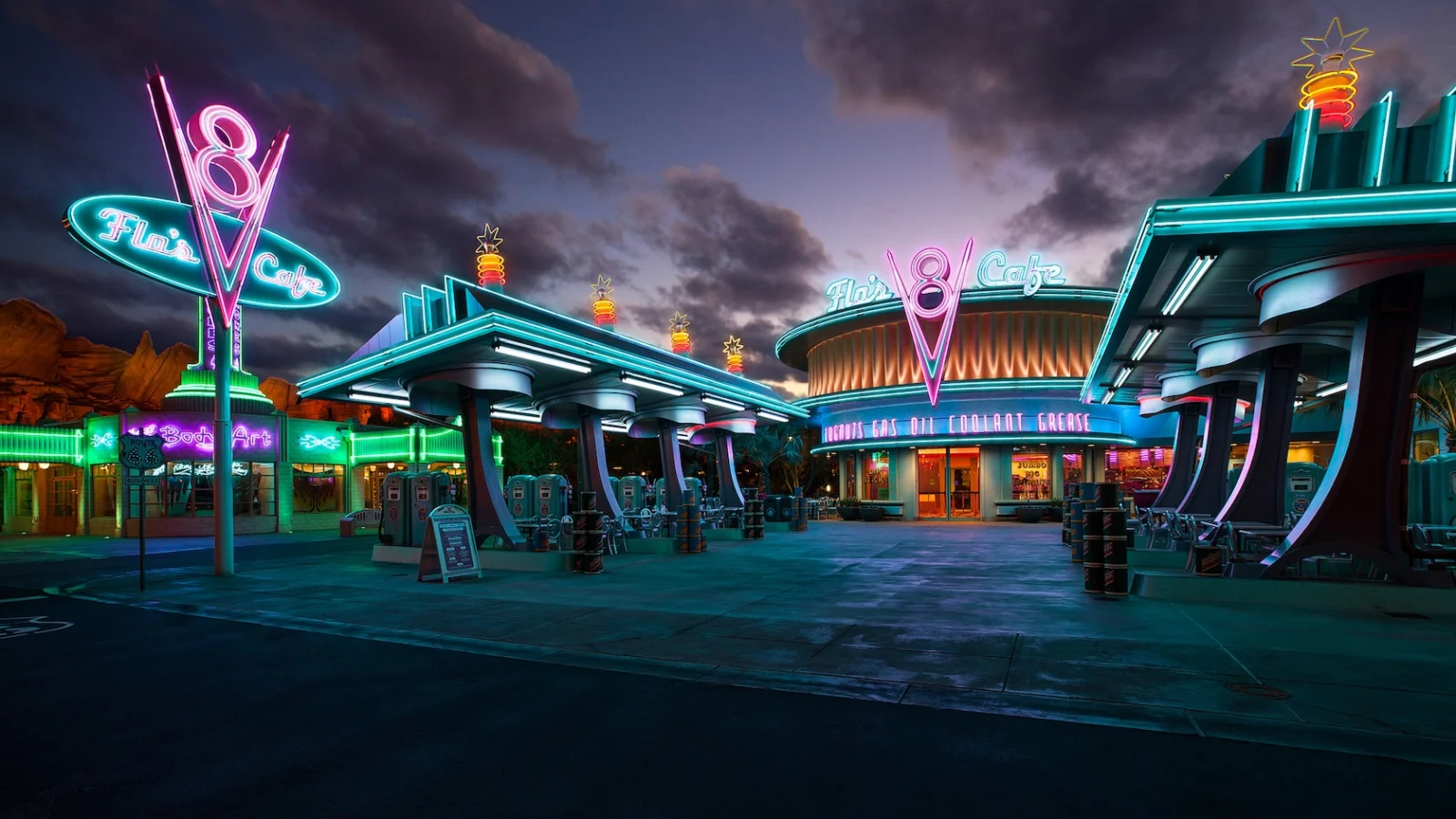
Cars Land began with a movie, but its designers also went back to the road behind that movie. Before the land opened at Disney California Adventure in 2012, Imagineers traveled Route 66 to study the towns and people that had inspired Radiator Springs. The research helped connect an animated world with the character of a real highway. Disney’s official research-trip video records the park team’s journey.
Follow the research beyond the race cars and rockwork. Small businesses and local hosts belong in this account, alongside the later task of adapting a cartoon-car town for human visitors. Keeping those stages separate gives the land’s history more shape.
Two teams, two research journeys
The film and park trips happened at different stages. D23’s history of Cars records a nine-day Route 66 journey in 2001 for nine key members of the film’s creative team. They traveled in four white Cadillacs with author and Route 66 historian Michael Wallis as their guide. Wallis later voiced Sheriff in the film.
That was research for the film. The Imagineering trip came later. A June 2012 report from Route 66 News dates it to 2008 and identifies the stretch from Erick, Oklahoma, to Needles, California. The report preserves Disney’s description of Wallis returning as the team’s guide. It also names principal interior designer Emily O’Brien and art director Greg Wilzbach as voices in Disney’s account of the journey.
Disney’s own Cars Land research-trip video is a useful companion. It documents the park team’s journey rather than asking viewers to assume that the filmmakers’ earlier travel was the only fieldwork involved.
 © Disneyland Resort
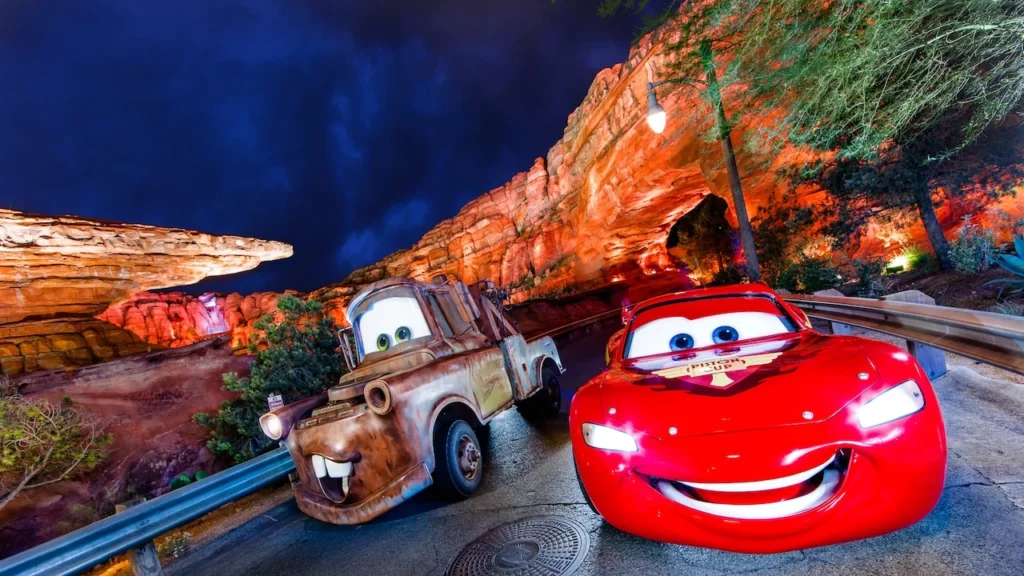
The roadside stops mattered as much as the road
In an account of Kevin Rafferty’s career, Mind2Momentum’s discussion of his research process describes John Lasseter urging the Cars Land team to take a Route 66 trip. The designers visited roadside cafés and shops and stayed in independent motels. The point was to encounter the world beyond the film’s frames.
Those choices explain the value of traveling slowly. A highway can be drawn as a line on a map. A town needs places where people stop, eat, work and talk. The team was studying the everyday setting around the journey, as well as the route itself.
In Disney Files, Imagineer Kathy Mangum recalled how people along Route 66 valued the film for bringing visitors back. Local places had inspired a movie; the movie then encouraged visits. Read the original 2012 feature, pages 4–6.
A fictional town with real-world roots
Radiator Springs is a created setting, not a scale copy of one town. Pixar’s production history places its imagined high-desert location between Gallup, New Mexico, and Kingman, Arizona. It credits research journeys with helping the team build the town’s character.
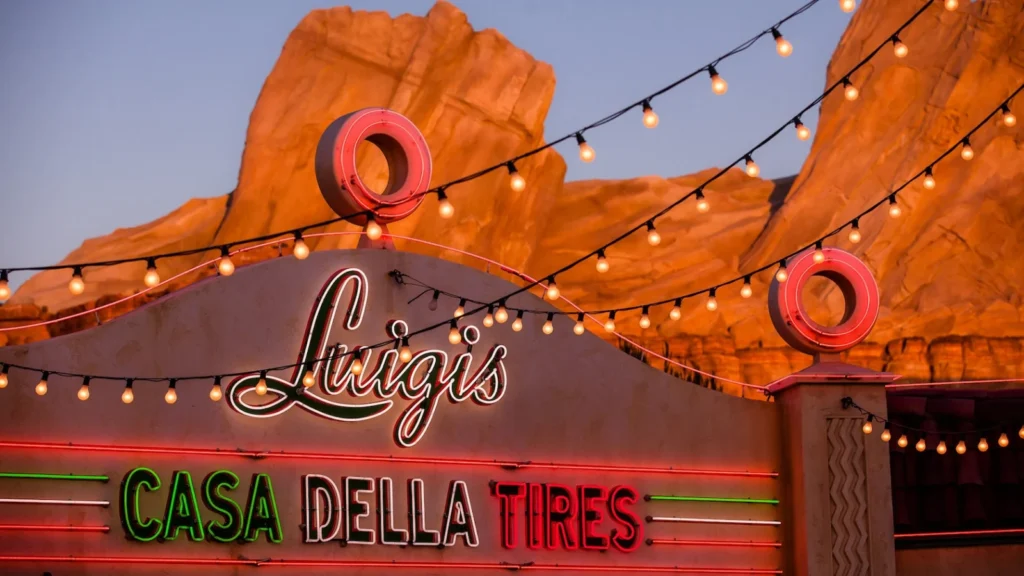
Pixar’s account places another design thread in 2000: production designer Bill Cone’s early drawings explored cars shaping monuments in their own likeness. Read the automobile-shaped scenery with that distinction in mind. The desert supplied a setting; the fictional inhabitants supplied the visual joke.
The research therefore had more than one output. People and businesses helped give the town its social life. Landscape references helped give it a believable place to sit. Car shapes transformed that setting into the world of the film.
 © Disney
A movie café had to serve human guests
Flo’s V8 Cafe needed adaptation. Imagineer Jim Kearns told Disney Files that the film’s building worked for animated cars; a real restaurant needed more space. The team worked with Pixar on the expansion.
The expanded café used a classic car-showroom approach. Disney Files also notes that park-developed imagery appeared in Cars 2. The magazine documents that exchange.
This is the practical side of a research story. Knowing what a place should feel like still leaves questions about what visitors must do there. Sit down. Order food. Find their group. The building has to support those actions while remaining part of the fictional town.
 © Disney
The ride and the town tell different parts of the story
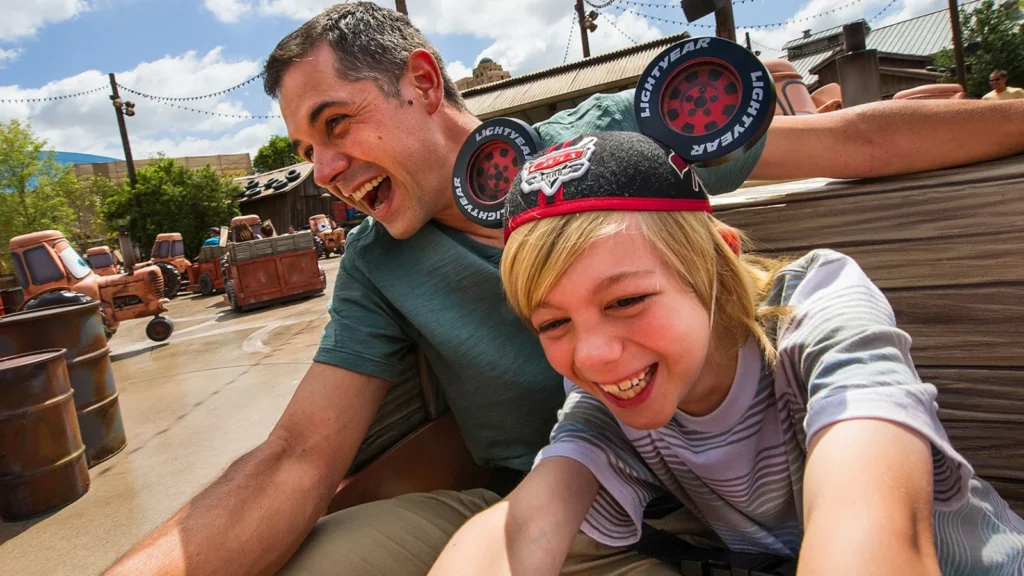
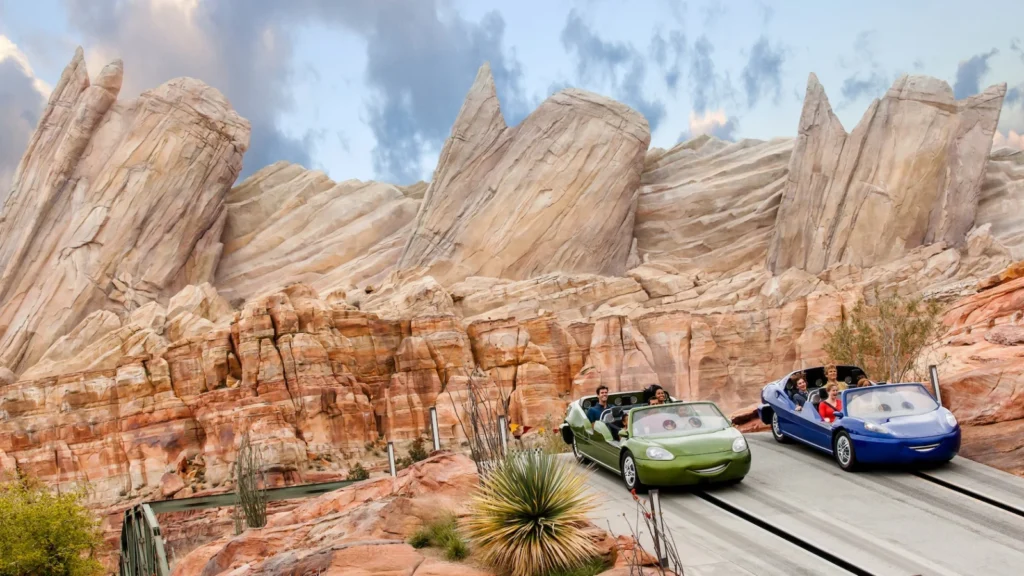
D23 describes Cars Land as a 12-acre realm with shops, restaurants and Radiator Springs Racers. Its account highlights the neon signs that light the town at sunset. The racing attraction is one part of that larger place, rather than the entire reason for its roadside design. D23’s anniversary feature connects those pieces.
The opening-year Disney Files account describes Racers moving from a scenic drive into a side-by-side race, using ride technology related to Test Track. That contrast gives a simple way to read the land: a town invites you to slow down, while its headline attraction eventually asks you to speed up.
 © Disney
What to notice next time
Start with a storefront rather than the biggest mountain. Compare its sign, its use and its character. Then look at the relationship between the road, the businesses and the surrounding scenery. Our guide to what makes a themed land feel like another world offers another way to notice those choices.
The documented lesson of the Cars Land trip is clear: Imagineers returned to the real source behind an already successful film. They studied the people and places along the road, then adapted that material for a park. For an earlier chapter in Disney’s habit of looking beyond the studio, read the documented amusement parks Walt Disney visited.
0 thumbs up0 thumbs down
Was it useful? Pick a thumb.
Guides & stories
Keep the good ideas coming.
A few next reads to help with the choices ahead.
For the places you’re exploring
How Disneyland locals turn theme park walks into exercise
Neil Haque walked Disneyland after work. Mark and Vanessa Gautier started with one mile. See how they made park walks part of their exercise routine.
Read articleFor the places you’re exploring
How to Plan a Short Disneyland Resort Break
One focused park day or a short break across both gates? Build from your real arrival and departure, then use flexible frameworks for shared highlights, meals, pauses, and the journey home.
Read article
For the places you’re exploring
Rides, snacks and a music video: Selena Gomez’s Disneyland days
A music video and a family outing reveal different sides of Selena Gomez’s Disneyland visits. Follow the rides, her own remarks and the stories behind the attractions.
Read article