
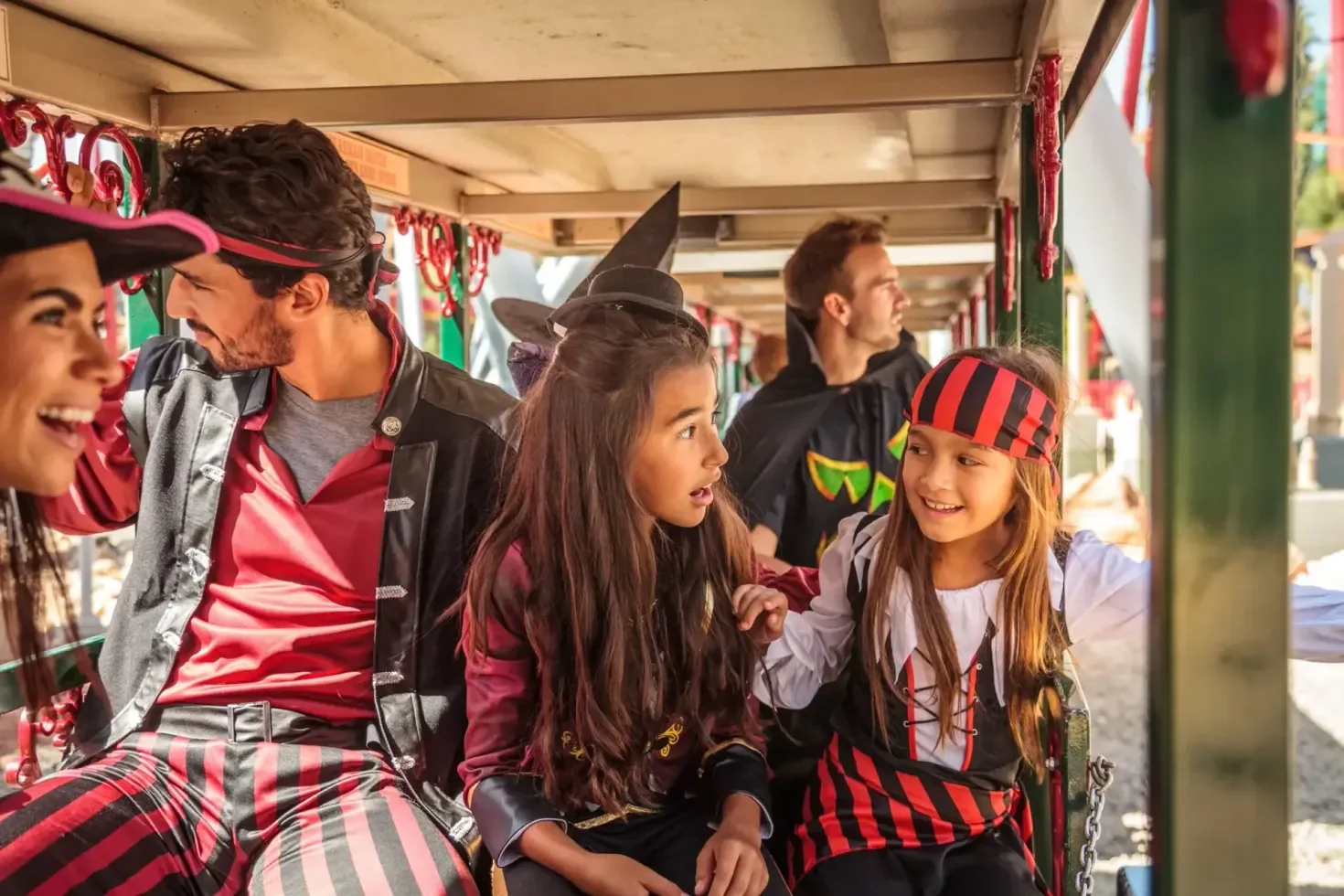
Start by asking what Halloween fun looks like to the child coming with you. They may want costumes and treats, a familiar character, or one small spooky moment. That answer is more useful than choosing the largest event and hoping it will fit.
Then match the idea to a real event. A daytime family offering and an after-dark horror event can share a park name while giving visitors very different experiences. Read the official description, age guidance, dates, and ticket terms before making promises.
These questions help you plan a visit around the child who will actually be there, with room for the adults to enjoy the day, too.
What part of Halloween does the child want?
Ask about the experience in plain words. Would they like dressing up, collecting treats, seeing decorated places, meeting a character, or watching a show? A familiar idea makes it easier for a child to explain what interests them.
Ask what they would rather skip. Darkness, sudden surprises, loud sound, masks, or a late finish may change the answer. Do not assume that liking a Halloween film means they want to step into every kind of live event.
Listen without turning the conversation into a test of bravery. A child should be able to say no to a particular idea without feeling that they have spoiled the trip. You can choose another seasonal plan.
Keep one or two shared wishes at the center. They give you a useful way to compare events without trying to promise the whole park.
 Photo: Disneyland Resort · Not THMPRK
Is this a family event or a scare event?
Use the exact event name when researching. Knott’s Spooky Farm and Knott’s Scary Farm have separate official pages for a reason. Read the descriptions rather than treating the similar names as interchangeable.
Knott’s Scary Farm states that it is not recommended for children under 13. That is guidance for that particular event. Read the current information for every event on your shortlist instead of applying one park’s approach to another.
Disney’s Oogie Boogie Bash is another distinct offering, at Disney California Adventure. Check its current entertainment, entry, costume, and admission details on the official page.
Choose the experience that matches your child’s interests and comfort. A smaller or earlier seasonal plan can be the right choice even when another event has more publicity.
Our comparison of family Halloween events and after-dark scares helps with this first choice. The park accessibility research guide can help you find more detailed official information when sound, lighting, or other effects matter to your child.
 Photo: Knott’s Berry Farm · Not THMPRK
What will the child see before the first attraction?
Think about the entrance, the route through the event, and the spaces between planned activities. A child experiences the setting as well as the attractions you choose. Check the official description for what happens around the wider event.
Do not promise that skipping a particular attraction removes every scare or intense effect unless the event clearly says so. Find out what the official guidance explains, and ask the park about any important detail that remains unclear.
Use current official photos and descriptions to talk about the visit, while remembering that a still image cannot show every effect. A costume or decoration that seems funny in a picture can feel different in a busy live setting.
Give the child an easy way to say that they want a pause or another choice. Agree on that before arrival, when the conversation can stay simple.
Does the timing fit the child’s day?
Read the event start, earliest entry, and finish information for the actual ticket. An evening event may ask for a different day shape from an ordinary daytime visit. Count travel and the trip home as well as time inside the park.
Avoid filling every hour before a late event simply because you are already nearby. A meal, rest, or quieter part of the day may make the evening more enjoyable. Choose the part of the visit that matters most rather than trying to use all possible hours.
Think about a useful stopping point. It might be after a shared show, a few treats, or one favorite experience. The ticket’s latest finish is not a goal the whole family has to reach.
If an earlier seasonal event fits better, give it a fair comparison. The best Halloween memory does not need to happen after dark.
The Disneyland guide for young children offers more ways to leave room for everyday family needs. If several ages are joining the trip, use the mixed-age day planner to agree on a shared finish.
Which admission does the plan require?
Check whether your event needs a separate ticket and whether ordinary daytime admission is part of your plan. Read the date, entry window, and any advance steps. A pass or daytime ticket does not automatically explain access to a named evening event.
If you are considering both a full day and a special evening, compare the combined time and cost with your child’s needs. Buying more admission only helps if the visit still fits the family.
Keep the confirmation with the current event terms. Check names and dates before the trip, and understand the change rules before paying. If the written information is unclear, ask the seller through its official support route.
Our Halloween event ticket guide explains those product checks in more detail. Settle admission before building a long list of event activities.
 Photo: Disneyland Resort · Not THMPRK
Will the costume work for the actual outing?
Read the event’s current costume, mask, prop, and bag rules. Check the guidance for the people attending, including any differences tied to age. An outfit seen in someone else’s photo is not enough to settle the choice.
Think about the practical day in the outfit. Walking, sitting, eating, and carrying belongings all belong in that decision. A costume can be fun without making every ordinary task harder.
Give the child a say in a comfortable version that follows the rules. If a particular detail is important and the written guidance leaves a question, contact the park before bringing it.
Keep the rest of the bag useful. Read the park’s current permitted-item rules and plan around the everyday needs of your family, rather than adding lots of things just in case.
What will everyone share, and where will you pause?
Choose a few things the adults and children want together. Put food and real breaks into the same plan. A group can enjoy different interests around those shared moments without spending the whole event in one tightly packed queue list.
If people split up, agree on adult responsibilities, a meeting point, and a plan for keeping in touch. Keep the arrangement clear enough that nobody has to guess who is with whom.
Leave room to change course when the actual evening feels different from the plan. The useful question is whether the group is still enjoying the visit, not whether every item has been completed.
Use the Disney California Adventure guide and Knott’s Berry Farm guide to explore those destinations, then return to the official event pages for the final details. Choose a Halloween your child wants to be part of, and give that visit enough room to work.
Explore the places in this guide
Disney California Adventure
Anaheim, California, United States
THMPRK Score: 8.0/10
Explore the place guideKnott’s Berry Farm
Buena Park, California, United States
THMPRK Score: 7.6/10
Explore the place guidePlace details come from the current THMPRK guide. Check official calendars and ticket terms for your visit.
 Photo: Disneyland Resort · Not THMPRK
0 thumbs up0 thumbs down
Was it useful? Pick a thumb.