
A park can have five things you love and still give you a tiring route between them. Before choosing from an attraction list, look at where those experiences sit. The shape of the visit matters as much as the names on your shortlist.
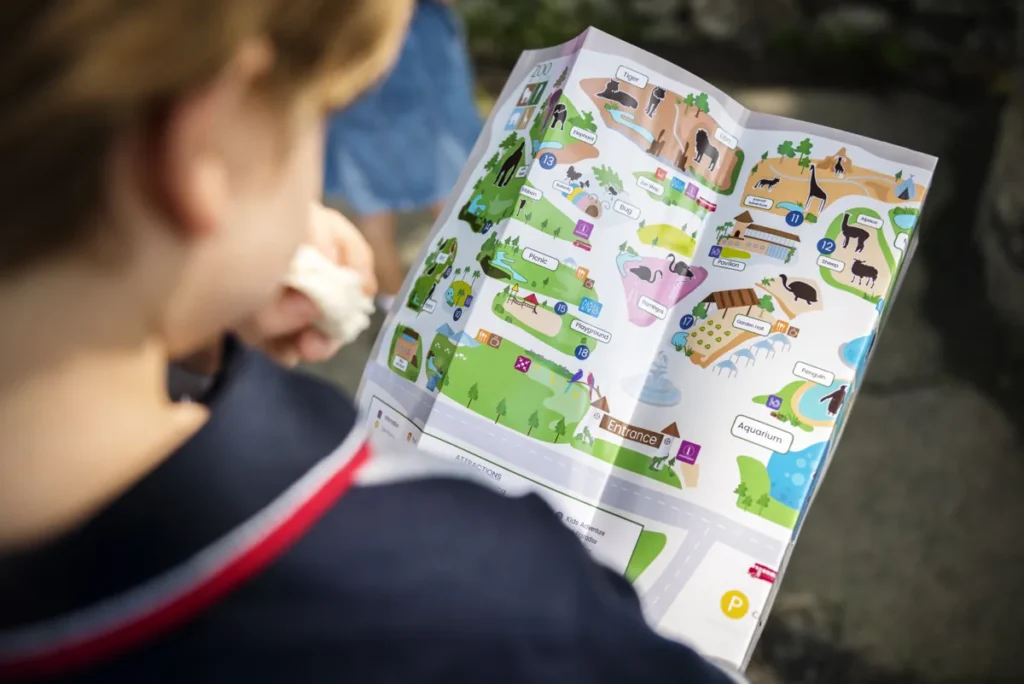
Layout affects the small choices you make all day: where to eat, when to pause, whether to cross the park again, and how easily a split group can meet. You do not need to plan every turn. A quick look at the current official map can reveal whether your imagined day holds together.
Think of the map as a conversation with your wish list. One tells you where you want to go; the other helps you see what that choice means.
Start with three places you want to reach
Choose a few real priorities before opening the map. These might be an attraction, a show, a meal, or a setting where you want to spend time. Three points are enough to begin seeing the shape of a day.
Find each one on the current official map for the exact park. Check the destination as well as the attraction name. A familiar brand can have different experiences in different parks, and a resort map can cover much more than one day’s admission.
Look at the spaces between your priorities. Are there nearby things the group would enjoy, or does the list ask you to move back and forth? Neither answer automatically rules a park out. It gives you something practical to discuss.
If your list is mostly one land, that may be a reason to slow down there rather than add more distant stops. A focused visit can feel full without covering every corner.
Read the park as a set of areas
Named lands and areas can help you group choices. The Disneyland Park overview presents distinct settings such as Fantasyland, Adventureland, and Star Wars: Galaxy’s Edge. Use those areas to organize a shortlist before deciding on a detailed order.
An area can hold more than the attraction that first drew your attention. Check the nearby food, entertainment, and other experiences on the official site. They may give a mixed-interest group several useful choices without another long crossing.
Avoid assuming that everything within a named area is close, open, or suitable for everyone. Read the current map and individual details. The area name is a planning tool, not a substitute for the actual information.
Try giving each part of the day a loose home. You might explore one area before a meal, then another afterward. That is easier to adjust than a route built from a long ranked ride list.
For a closer look at those settings, read what makes a themed land feel like another world. Our Disneyland Park and California Adventure comparison can help you choose which park’s areas you most want to explore.

Notice the journey around fixed bookings
A show time or dining booking can quietly become the center of your route. Put it on the map first, then check what fits nearby before and after. This can prevent a favorite attraction from becoming an awkward dash across the park.
Count the approach as part of the plan. Reaching the general area is not always the same as being ready to enter a venue or use a service. Read the current official guidance for any experience that needs a specific arrival process.
Keep some room around the booking. A route that works only if every earlier choice takes exactly the time you hoped gives the group little flexibility. One delayed decision can make the rest of the list feel urgent.
You can solve that by shortening the list, changing its order, or choosing a different fixed booking. The map helps you see those options before the day begins.
Treat a break as a place you need to reach
“We will stop when we are tired” leaves the location undecided until the group has the least energy to choose. Find possible break areas while the plan is still simple. Check the park’s current facility and access information for the needs that matter to you.
Think about meals in the same way. A restaurant may look appealing, but the journey to it belongs in the choice. A simpler meal near your planned area can sometimes make more sense than a special stop far from everything else.
Do not assume an attraction is a rest because it is indoors or slow. It may involve standing, walking, sound, or other effects. Plan the kind of pause your people actually need.
Our park-day comfort guide gives another example of putting pause points into the first plan. The same habit can help even when heat is not the main concern.

Make split-group plans easy to rejoin
If different interests lead people toward different attractions, use a clear meeting point and a plan for staying in touch. Choose something everyone can identify from the current map. “Near the big ride” may not mean the same place to everyone.
Check the route each smaller group will take. A split that sounds simple on an attraction list may leave one group with a much longer journey. A shared meal or experience can provide a useful point to rejoin.
Give each group something it wants to do. A non-rider should not have a permanent waiting role while others follow their highlights. The map can help you find nearby choices, but the person’s interests still lead.
This is particularly useful when comparing two parks. The Disney California Adventure overview shows a different set of lands and experiences from Disneyland Park. Compare how your actual group’s choices fit in each setting.
Use the mixed-age day planner to agree on shared highlights. If access details shape the route, the park accessibility research guide helps organize the questions to check with the operator.

Understand the format before measuring the walk
An attraction’s place on the map does not fully explain the experience. A tour, ride, show, or walk-through can use your time and energy in different ways. Read the official description before treating it as a small stop between other plans.
Universal Studios Hollywood’s Studio Tour is one example of an experience that deserves its own place in the day. If it is a main reason for visiting, plan around it rather than squeezing it into a leftover gap.
The same applies to a scheduled performance or an experience with particular access arrangements. Find out what the visit involves, then decide where it fits. A short distance on a map does not promise a quick experience.
Keep the group’s comfort in the discussion. The person who wants the longest attraction list may not be the person who finds the route most demanding. A workable plan needs both views.
Compare two possible routes before choosing two parks
If you are considering a multi-park day, sketch a small version of the visit in each park first. Then add the move between them and the ticket conditions that allow it. The combined plan may feel different from either park on its own.
Ask what the second park adds that you most want. If the answer is one specific experience, decide whether reaching it is worth the extra travel and choices. There is no need to add a second entrance simply because a ticket can allow it.
Our Disneyland first-visit guide explains how to make the wider resort choices in a useful order. Start with the day you want, then check whether the map supports it.
Use Explore places to build your next shortlist. Pick a few priorities, find them on the official map, and give the spaces between them some thought. A good route leaves room for the day to feel like a day out.
0 thumbs up0 thumbs down
Was it useful? Pick a thumb.