Walt Disney visited amusement parks long before he built Disneyland Park—and kept studying other parks after it opened. The record includes childhood outings, meetings with park operators, overseas visits and a photographed inspection of a California car ride. But a visit, a reported remark and a proven design influence are three different things.
Begin by separating contemporary records and photographs from later recollections. This survey follows the parks those sources support, labels a widely reported miniature-park visit with less direct evidence, and gives carousels, historic villages, and fairs their own context. No complete outing log is claimed. Employee research trips also remain distinct from Walt’s own travels.
The early outings: Electric Park and Beverly Park
Electric Park, Kansas City, Missouri
After the Disney family moved to Kansas City in 1911, young Walt visited Electric Park at 47th Street and The Paseo. This was the later Kansas City park of that name, not the earlier East Bottoms site. A Kansas City Public Library history published with The Kansas City Star identifies his visits and describes its lights, railway and fireworks.
Those features make the park relevant to the story of Disneyland. They do not, by themselves, prove that any single Disneyland feature was copied from it. The childhood visits belong in the record; precise words supposedly spoken by the young Walt need stronger support than repeated quotations without a traceable original account. No such quotation is used here.
Beverly Park, Los Angeles, California
Walt also frequented Beverly Park, the small children’s amusement park near Beverly and La Cienega boulevards. The public television documentary Beverly Park, from Things That Aren’t Here Anymore describes both his visits and his study of the park before Disneyland. Its operator, David Bradley, became part of the circle of amusement specialists around the project.
This is a useful reminder of the scale of Walt’s research. A small neighborhood park could reveal how families used rides and spent time together. A documented research connection does not establish that every feature later credited to Bradley came from a particular conversation at Beverly Park.
Bud Hurlbut’s kiddie park, El Monte, California
Ride maker Bud Hurlbut operated a small amusement park at Crawford’s Market in El Monte. Park World’s account of Hurlbut’s career says Walt frequented that earlier park and the two became friends. Historian Jim Korkis also records Hurlbut’s recollection of Walt asking about rides. These are retrospective accounts, rather than a dated admission record. They support the visit and exchange of practical knowledge, but not a specific ride being copied. This was not Hurlbut’s later Castle Park in Riverside.
Tivoli: a well-supported visit and influence
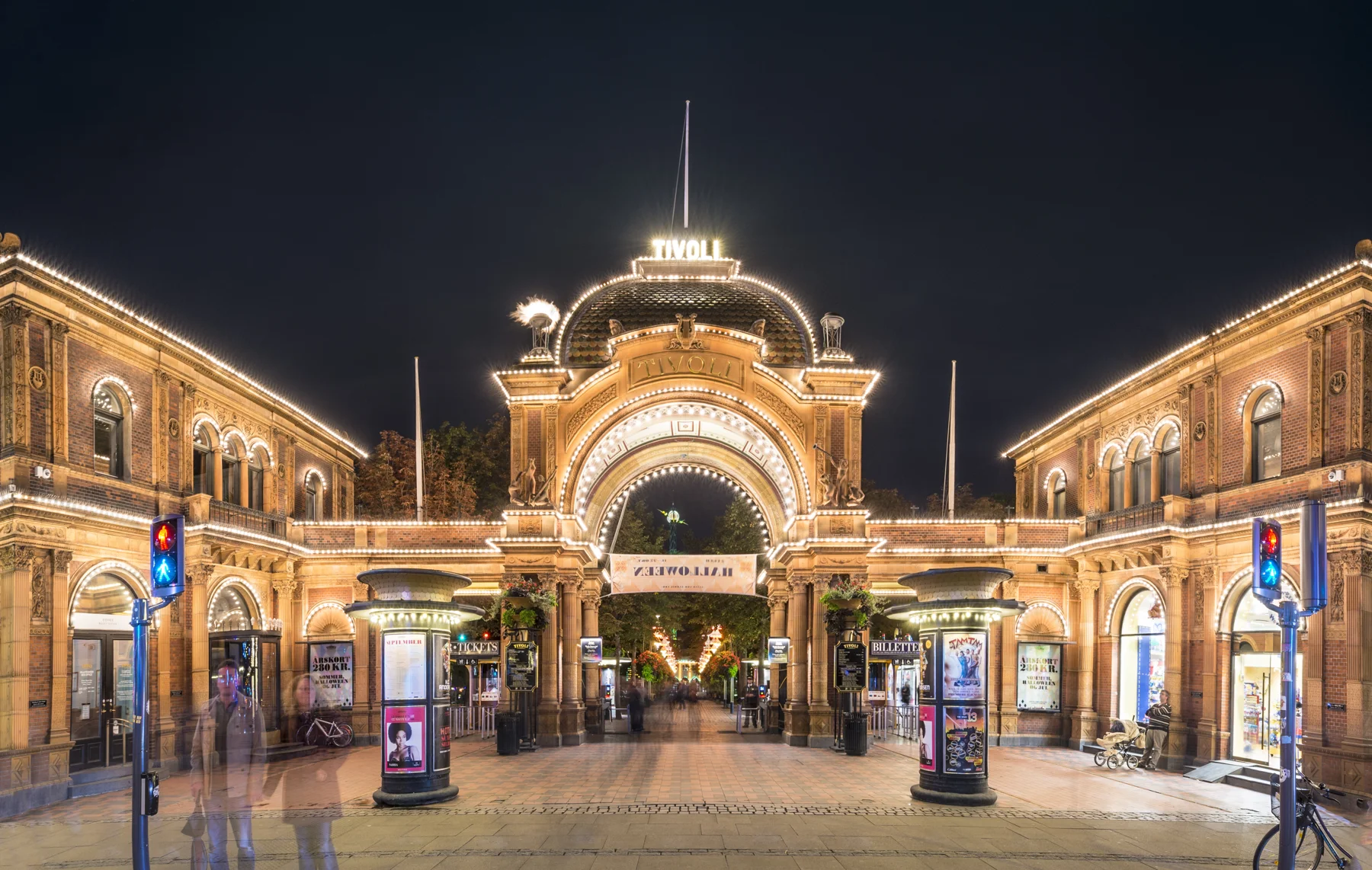
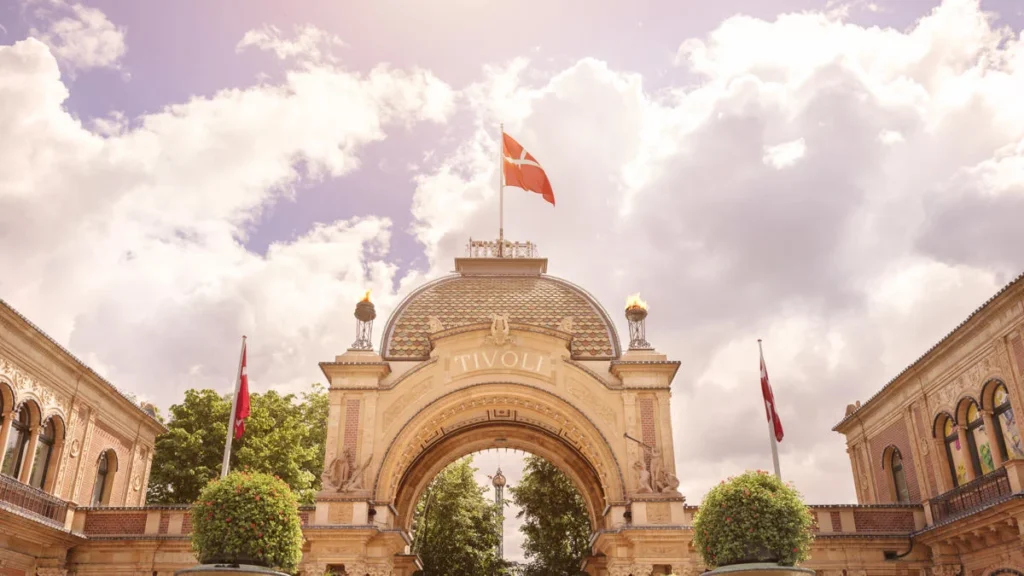
Tivoli Gardens in Copenhagen has unusually strong support. The Walt Disney Archives identifies a visit during Walt and Lillian’s 1951 European trip in its account of photographs from Walt’s personal camera. That places him there four years before Disneyland opened.
The Walt Disney Family Museum’s account of his European travels explains the appeal: Tivoli offered an environment that adults and children could enjoy together. It attributes to Walt the description “spotless and brightly colored.” The museum also records his praise for the park’s music, food and staff. Here the connection to his own park is supported by more than a visual resemblance.
 Tivoli Gardens
Walt returned after Disneyland opened, too. A contemporary Billboard report dated July 14, 1958 records a June 28 visit to Tivoli. This later trip matters: not every visit was research for the original 1955 park.
Knott’s and Playland: learning from park operators
Knott’s Berry Farm, Buena Park, California
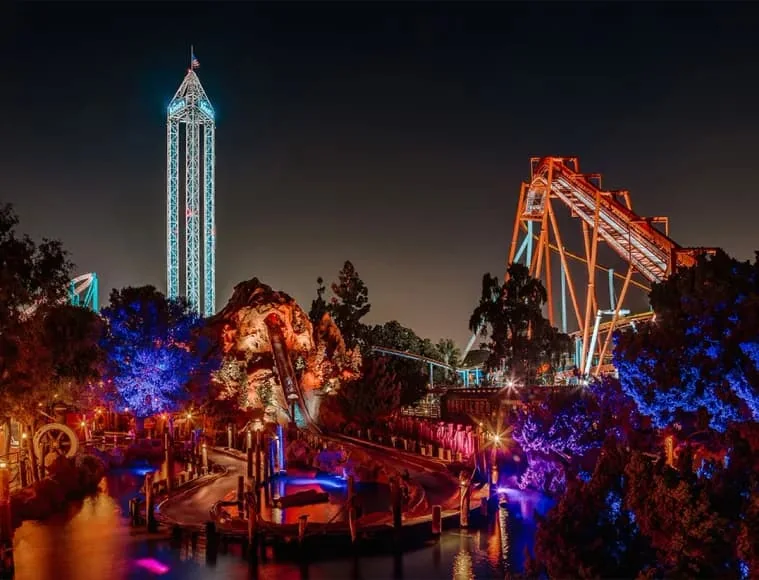
Knott’s Berry Farm was another place Walt knew before Disneyland. Historian John Wills’s study of Knott’s Ghost Town documents visits during the 1950s, including a 1951 purchase of handblown glass for a Disney production. Korkis’s history also records a 1953 visit with Disney staff to study the park’s operation.
The supported influence is practical and broad: Walt and his team looked at an established Western setting and the way people used it. Similar scenery is not enough to prove that one attraction directly caused another. Dates matter especially here: later Knott’s rides cannot explain Disneyland’s opening-day design.
 Knott’s Berry Farm
Playland at the Beach, San Francisco, California
Playland’s connection is supported by a participant’s account. In his 2002 oral history with John Martini, George K. Whitney Jr. recalled Walt’s contact with his father and the team’s study of Playland during Disneyland’s development. Whitney subsequently joined the Disneyland project. The National Park Service holds the interview tapes.
The record supports an exchange of operating experience, rather than a story in which Disneyland emerged from one isolated flash of inspiration. The Western Neighborhoods Project’s history also describes Walt visiting Playland. Accounts vary on the exact year, so this article places the visit in the early 1950s without choosing an unsupported day.
Coney Island: a district, with a named park inside it
Coney Island in Brooklyn needs careful naming. It is an amusement district, not one park. Historian Jim Korkis records an August 1953 outing with actor Richard Todd, drawing on Todd’s interview with Michael Barrier. Todd remembered trying the rides and eating cotton candy with Walt.
Leslie Iwerks’s The Imagineering Story identifies Steeplechase Park in its discussion of Walt’s Coney Island visit. The district and that park should not be counted as two independent destinations. Nor should the visit be expanded into a claim that he entered every separately operated Coney Island attraction.
Todd’s account is a witness recollection. It supports Walt looking at what visitors enjoyed. It does not independently verify every harsh remark about Coney Island later attributed to Walt, so those remarks are not presented here as established quotations.
Two Oakland parks, not one
The newspaper record helps distinguish two Oakland visits. A May 7, 1954 Oakland Tribune “Accolade” column, reproduced in Mark Ballard’s source-based Fairyland history, says Walt toured Peralta Playground and Children’s Fairyland before Disneyland opened. Keep the chronology precise: publication followed the outing, so the printed date cannot establish the exact visit date.
Peralta Playground, also known as Peralta Playland
The Tribune says Walt drove the miniature train around Peralta’s oval. It reports his favorable reaction to the train but does not supply a full, independently recorded quotation. This train ride belongs to the Peralta visit. Moving it to Fairyland changes what the contemporary source actually says.
Children’s Fairyland
The same column describes Walt touring Fairyland with Dorothy Manes and studying color, design, operating costs and technical details. That is direct contemporary support for research before Disneyland. It does not prove that a particular Disneyland scene came from a particular Fairyland set.
An older Walt Disney Archives answer said no specific evidence of a visit had turned up in its own holdings. That is a statement about what the Archives found, not proof that the visit never happened. The newspaper report supplies evidence outside those holdings. The Archives also confirms that Manes later worked at Disneyland. Exact dates assigned to the visit in later accounts should be treated with more care than the underlying fact of the visit.
Disneyland itself: the park Walt kept visiting
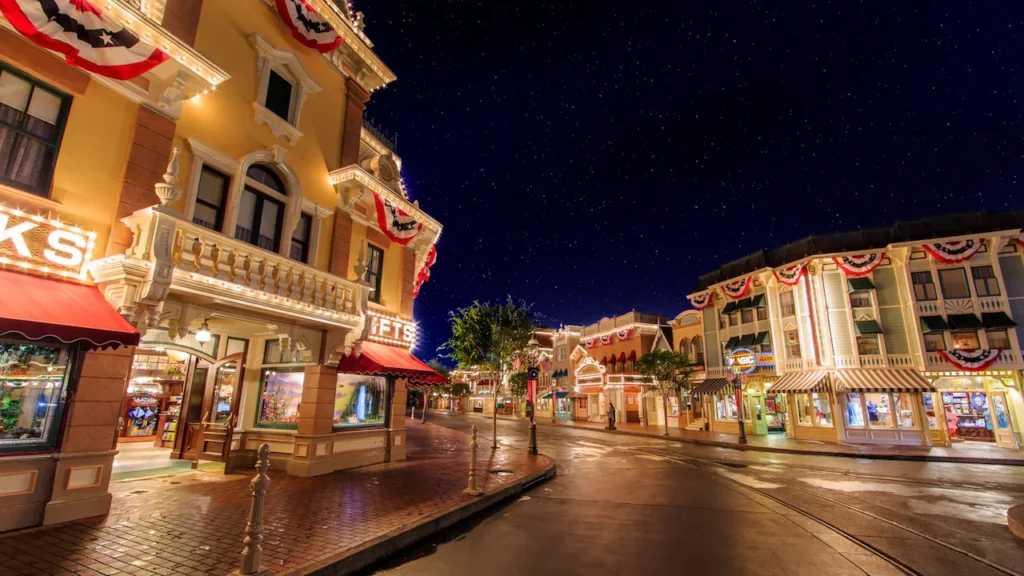
Walt’s presence at Disneyland is supported by opening-day records and a large photographic record. Disney’s account of Walt’s Disneyland legacy places its opening on July 17, 1955. A PBS photographic collection of Disneyland visitors shows him hosting guests there in later years.
 Disneyland Resort
This is the finished park that belongs in a lifetime survey, rather than merely the destination of all the earlier research. Its later additions also explain why visits to other parks after 1955 still mattered. Disneyland’s opening did not bring the research to an end.
Tibidabo: a post-Disneyland visit in 1957
Barcelona’s Tibidabo amusement park’s own history records Walt visiting in 1957 and wanting to buy its automata collection. That date is after Disneyland’s opening, so this visit cannot be an influence on Disneyland’s original construction.
The often-repeated blank-check detail requires a separate qualification. Barcelona’s tourism authority introduces that part as a story. The visit and interest in mechanical figures are supported by the operator’s account; the dramatic purchase anecdote is not used here as a documented transaction. No unverified quotation about the park’s magic is attributed to Walt.
Santa Cruz: a photographed ride inspection in 1963
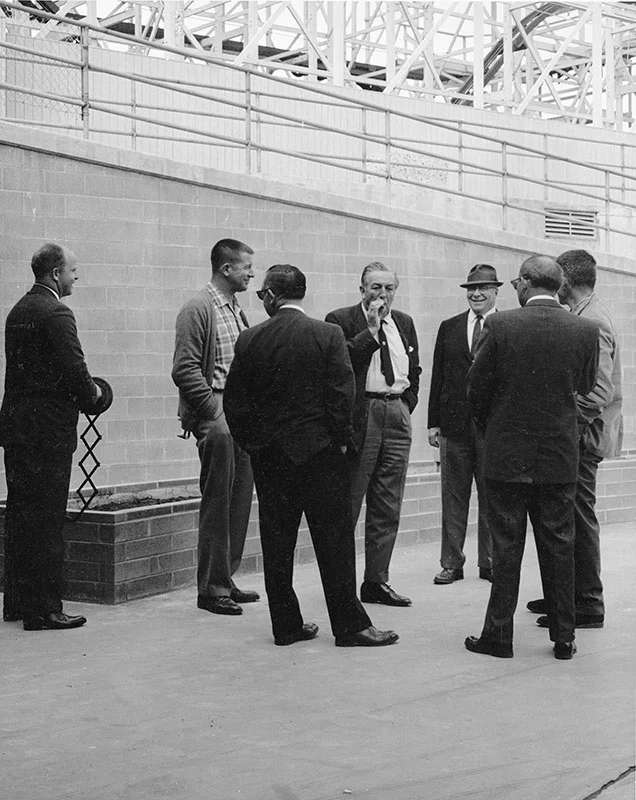
On March 9, 1963, Walt visited the Santa Cruz Beach Boardwalk to inspect Autorama. The Boardwalk’s account by employee Ted Whiting includes a photograph identifying Walt, Joe Fowler and Arrow Development’s Ed Morgan. It describes Walt inspecting the car ride’s center guide rail and then riding it.
 Santa Cruz Beach Boardwalk / Santa Cruz Seaside Company
Whiting links that inspection with a guide rail added to Disneyland’s Autopia two years later. His eyewitness account supports the inspection itself particularly well. The later engineering change is the connection he draws; it is not evidence that the Boardwalk inspired the original Autopia, which was already operating in 1955.
Madurodam: a reported visit with a less direct record
Korkis reports that Walt visited the Dutch miniature park Madurodam in July 1952 with Bill Cottrell and connects its models with Disneyland’s miniature-land ideas. Anaheim’s historic resources report also names a 1950s visit. These are published historical accounts, not a contemporary visit record reproduced here. The visit is therefore identified as reported rather than placed on the same evidentiary footing as the photographed Santa Cruz inspection. No exact remark from Walt is supplied.
Related influences that were not amusement-park visits
Griffith Park and Beverly Ponyland
The Walt Disney Family Museum describes regular carousel outings in Griffith Park with Walt’s daughters and his wish for parents and children to share the fun. Griffith Park is a municipal park with amusements, rather than a standalone theme park. Separately, the Archives’ personal-camera collection identifies a 1947 photograph Walt took of his children at Beverly Ponyland. Ponyland was adjacent to Beverly Park; the two should not be silently merged.
Greenfield Village and the Chicago Railroad Fair
The Henry Ford’s collection-based account documents Walt’s first Greenfield Village visit on April 12, 1940, a museum visit with his family on August 20, 1943, and a return to the village with Ward Kimball on August 23, 1948. The last visit accompanied their trip to the Chicago Railroad Fair. The village is a historic museum environment; the fair was a temporary exhibition.
The museum connects the 1948 experience with Walt’s August 31 memo describing his proposed park. D23’s account of the same trip also identifies the fair and village as influences. This is a stronger link than simply noticing that two places both had old buildings or trains.
What the evidence does—and does not—show
Walt learned from small children’s parks, large amusement grounds, operators, museums and a car ride built after Disneyland opened. The evidence supports a long process of observation. It does not justify turning every place he visited into a direct source for a Disney attraction.
Claims about Efteling belong outside the confirmed itinerary: the park-visit story is discussed as an unsubstantiated tradition in this investigation of the Efteling claim. A claim that Disney staff visited a park likewise cannot establish that Walt went with them. And the Archives’ record of Walt’s Florida site visits concerns land for a future project, not a visit to an operating Florida Disney park.
For your next park day, look at the details these records make worth noticing: how families share space, how a ride guides its vehicles, and how a setting holds together. Continue with what makes a themed land feel like another world or explore Disneyland Park and Tivoli Gardens on THMPRK.
0 thumbs up0 thumbs down
Was it useful? Pick a thumb.
Guides & stories
Keep the good ideas coming.
A few next reads to help with the choices ahead.
For the places you’re exploring
Halloween Park Visits With Children: Questions to Ask First
Treats, costumes, and a late night can mean different things to different children. Ask these practical questions before choosing a Halloween park event and making promises about the visit.
Read article
For the places you’re exploring
Two Days at Disneyland Park: A Plan Built Around the Lands
Give Disneyland Park two different days: storybook and cartoon settings first, then adventures around the river and Galaxy’s Edge. Compare the choices and leave enough space for meals, breaks and repeat favorites.
Read day plan
For the places you’re exploring
One Day at Disneyland Park: A Flexible Plan With Room for Breaks
Choose three priorities for a day at Disneyland Park, then build in meals, breaks and room to change course. This flexible outline helps mixed-interest groups make useful choices without a minute-by-minute schedule.
Read day plan